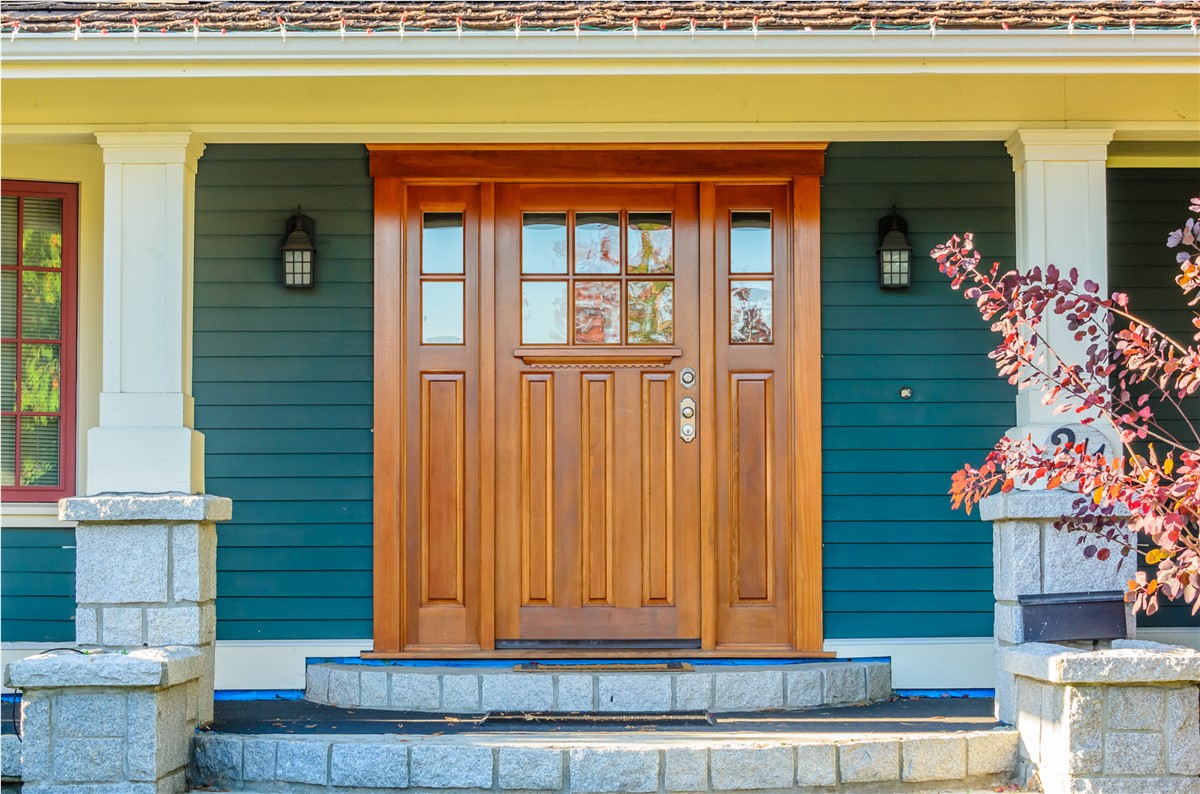
Your exterior doors do more than let people in and out of your home. They are one of the primary barriers between your living space and the outside air. When they start to fail, you may not notice right away, but your energy bills often will. Poorly sealed or aging doors can quietly drive up heating and cooling costs month after month without ever making it obvious that the door is the problem.
Here are five signs that your exterior doors may be costing you more than they should.
1. You Can Feel a Draft Near the Door
This is the most straightforward sign. If you stand near your front door, back door, or patio door on a cold day and feel cool air coming through, your door is no longer sealing properly. The same issue works in reverse during summer, letting hot air in and cooled air out.
Drafts typically come from three places: worn weatherstripping along the sides and top of the door frame, a damaged or compressed door sweep at the bottom, or a door that has warped slightly and no longer sits flush in its frame. In some cases, all three issues are present at the same time.
A quick test is to hold a lit candle or a thin piece of tissue near the door edges while it is closed. If the flame flickers or the tissue moves, air is getting through. That air exchange is a direct drain on your heating and cooling system, forcing it to work harder and run longer to maintain your desired indoor temperature.
2. Your Energy Bills Have Increased Without a Clear Reason
If your heating and cooling costs have crept up over the past year or two and you cannot point to a specific cause, your exterior doors are worth examining. Most homeowners assume the issue is with their HVAC system or windows, but doors are a common and frequently overlooked source of energy loss.
If your bills have gone up, walk through your home and check every exterior door for drafts, visible daylight around the frame, or gaps between the door and the threshold. Any of these is a sign that your door is no longer doing its job efficiently.
3. You Can See Daylight Around the Door Frame
Close your exterior door and stand on the inside in a darkened room. Look carefully around the edges of the door, along the top, sides, and bottom. If you can see any light coming through, so can air.
Visible light around a closed door means the seal has failed. This can happen as weatherstripping wears down over years of use, as the door frame shifts with the natural settling of the house, or as the door itself warps due to moisture and temperature changes over time.
This is a particularly common problem in older homes throughout Pennsylvania, where seasonal temperature swings put significant stress on exterior doors year after year. A door that was installed 15 or 20 years ago and has never had its weatherstripping replaced is almost certain to have gaps that are affecting your energy efficiency.
4. The Door Is Difficult to Open, Close, or Latch
A door that sticks, drags, or requires extra force to latch is not just an inconvenience. It is a sign that the door has shifted out of alignment, which almost always means gaps have opened up somewhere in the frame. When a door no longer sits correctly in its opening, it cannot seal correctly either.
This kind of misalignment is often caused by the natural movement of a home's foundation and framing over time. It can also be caused by moisture damage to the door itself, particularly in wood doors that have absorbed water and swollen or warped. In either case, the result is a door that leaves air pathways open even when it appears to be fully closed.
Beyond the energy cost, a door that does not latch properly is also a security concern. If the door does not close and seal firmly, it is worth having it assessed sooner rather than later.
5. The Door Is Old, Hollow, or Visibly Damaged
Older exterior doors, particularly hollow-core doors that were never designed for exterior use, offer very little insulation value. A hollow door provides almost no resistance to heat transfer, meaning the temperature difference between indoors and outdoors passes straight through it.
Modern exterior doors are built with insulated cores, typically polyurethane or polystyrene foam, that provide a meaningful thermal barrier. If your door was installed more than 15 to 20 years ago, there is a good chance that it does not meet current energy efficiency standards regardless of how well it seals.
Visible damage is another sign that the door has run its course. Cracks, rot, warping, or a surface that has deteriorated to the point where paint or finish will not adhere properly are all indicators that the door's structural integrity has been compromised. A damaged door cannot insulate or seal the way it was designed to, and no amount of weatherstripping will fully compensate for a door that is no longer sound.
What to Do If Your Doors Are Failing
Some issues, like a worn door sweep or cracked weatherstripping, can be addressed with minor repairs. However, if your door is old, warped, hollow, or showing multiple signs of failure, replacement is usually the more cost-effective solution in the long run. A new, properly installed exterior door will seal more effectively, insulate better, and hold up longer than an aging door that has been patched repeatedly.
When evaluating replacement doors, look for options with a high energy efficiency rating, a solid insulated core, and quality weatherstripping included as part of the installation. Entry doors, patio doors, and storm doors all serve different functions, and the right choice depends on where the failing door is located and how it is used.
Appleby Systems has been helping homeowners throughout Pennsylvania replace aging exterior doors with energy-efficient options since 1997. If you are seeing any of the signs above, contact us to schedule a free in-home estimate and find out which door replacement option is right for your home.
Subscribe to Appleby Systems's Blog



Comments